

TEMA second German trial successfully completed in the Ahr Valley
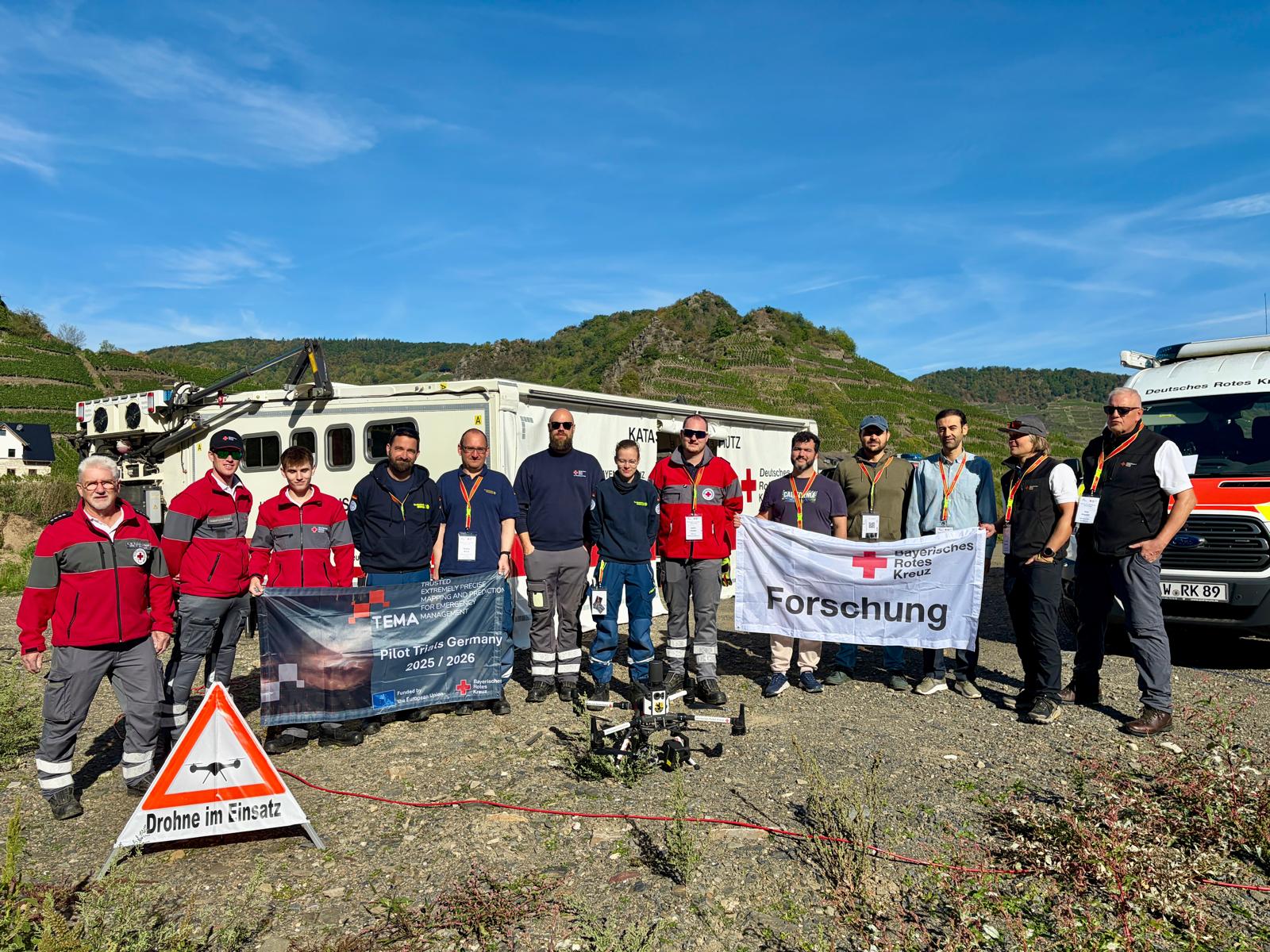
On 23–24 September, the TEMA platform was put to the test in a realistic flood emergency scenario in the Ahr Valley, Germany, hosted by BRK (Bayerisches Rotes Kreuz).
The two-day trial marked an important step in the practical validation of TEMA, bringing together around 60 participants to assess how the platform and its underlying technologies can support emergency management in realistic operational conditions.
The trial built on the experience of the devastating floods that affected the Ahr Valley and provided an opportunity to test TEMA in a scenario reflecting the complexity of a real flood emergency.
Bringing together different sources of information
One of the central objectives of the trial was to test how data from different sources can be integrated into a shared situational picture.
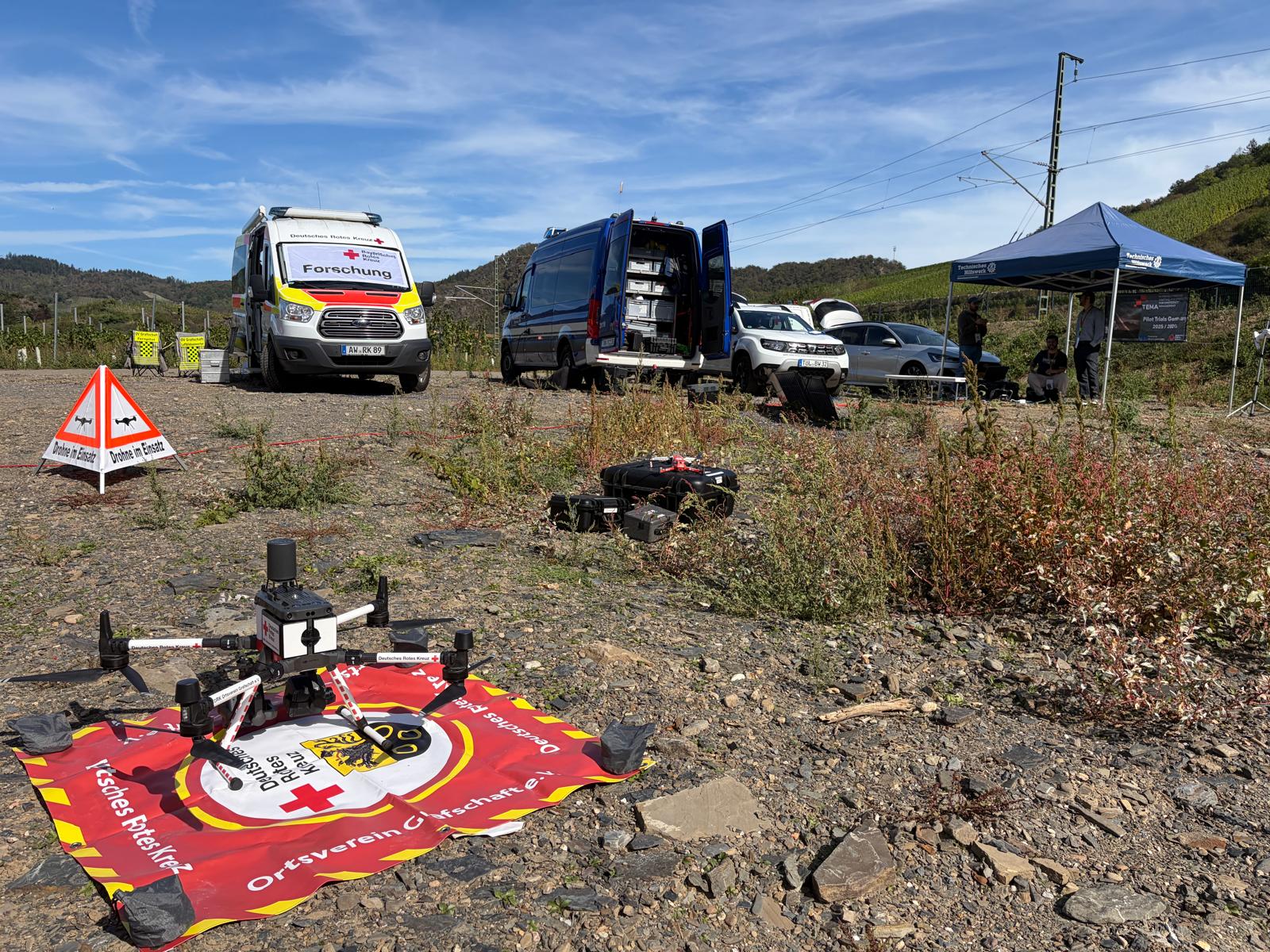
During the exercise, TEMA brought together historical flood data and real-time operational information, including data from:
- Drones
- Satellites
- Sensors
- Social media
- Weather information
Combining these different sources is particularly important during emergencies, when decision-makers need to understand what is happening on the ground while also drawing on historical information and other contextual data.
The trial therefore provided an opportunity to assess how TEMA can move from individual data sources towards a more comprehensive picture of an unfolding emergency.
From the field to the command centre
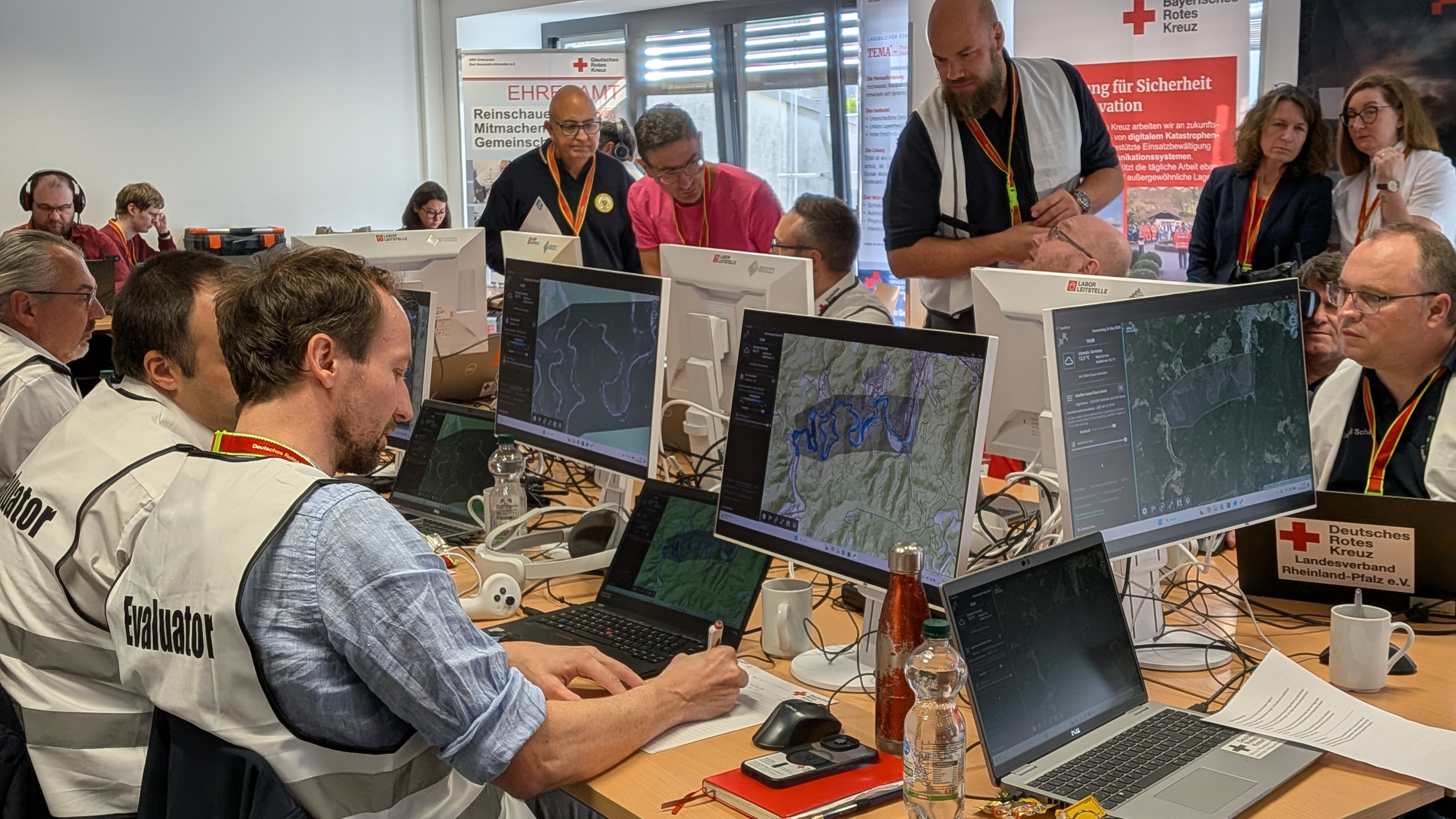 The trial connected activities in the field with the wider TEMA Platform and command environment.
Field activities generated and provided operational information, while the command centre brought different data streams together to support the assessment of the situation and the execution of operational tasks.
This end-to-end approach was central to the trial. Rather than testing individual technologies in isolation, the exercise explored how the different components of the TEMA platform can work together to support situational awareness, decision-making and coordination.
The trial also demonstrated the importance of the connection between technology and its users. First responders and emergency management personnel were directly involved in testing the platform, providing an opportunity to assess its usefulness from an operational perspective.
Testing TEMA technologies in a realistic scenario
The second German trial also provided an opportunity to evaluate the integration of Artificial Intelligence, Big Data Analytics and an edge-to-cloud computing continuum.
These technologies form part of TEMA's approach to processing and analysing large volumes of information from different sources and making that information available to support emergency response.
The focus, however, was not simply on demonstrating technological capabilities. The trial aimed to understand how those capabilities perform when integrated into a realistic emergency management scenario and used by people carrying out operational tasks.
This distinction is important. Successful technology validation requires more than showing that a system works technically. It also requires understanding whether it provides useful information, whether it fits operational workflows and whether end users can use it effectively to support their decisions.
Validation with end users
Around 60 participants contributed to the trial, including TEMA partners, end users, evaluators and observers.
Their involvement provided an important opportunity to gather practical feedback on the TEMA platform. Through the exercise, participants could assess how the different components supported situational awareness, decision-making, resource allocation and coordination.
The evaluations will help the project identify what works well, where there is room for improvement and how the system can be further developed to meet the needs of those working in emergency management.
This practical validation with end users is a crucial part of TEMA's journey from testing to adoption.
Photos credit: Bavarian Red Cross, 2026